BEFORE THE HERDS MOVE, WE'RE ALREADY THERE.
A day in the life of a tour guide.
THE ALARM THAT NOBODY COMPLAIN ABOUT
- A quick cup of strong tea, a weather check — and the most important ritual: a long look south toward Kilimanjaro. On a clear morning, the mountain is everything. On a cloudy one, you know your guests will be scanning the horizon all day hoping for a glimpse. Either way, the bush doesn't wait. You go out, and you see what the day decides to give you.
INTO THE WILD AT DAWN
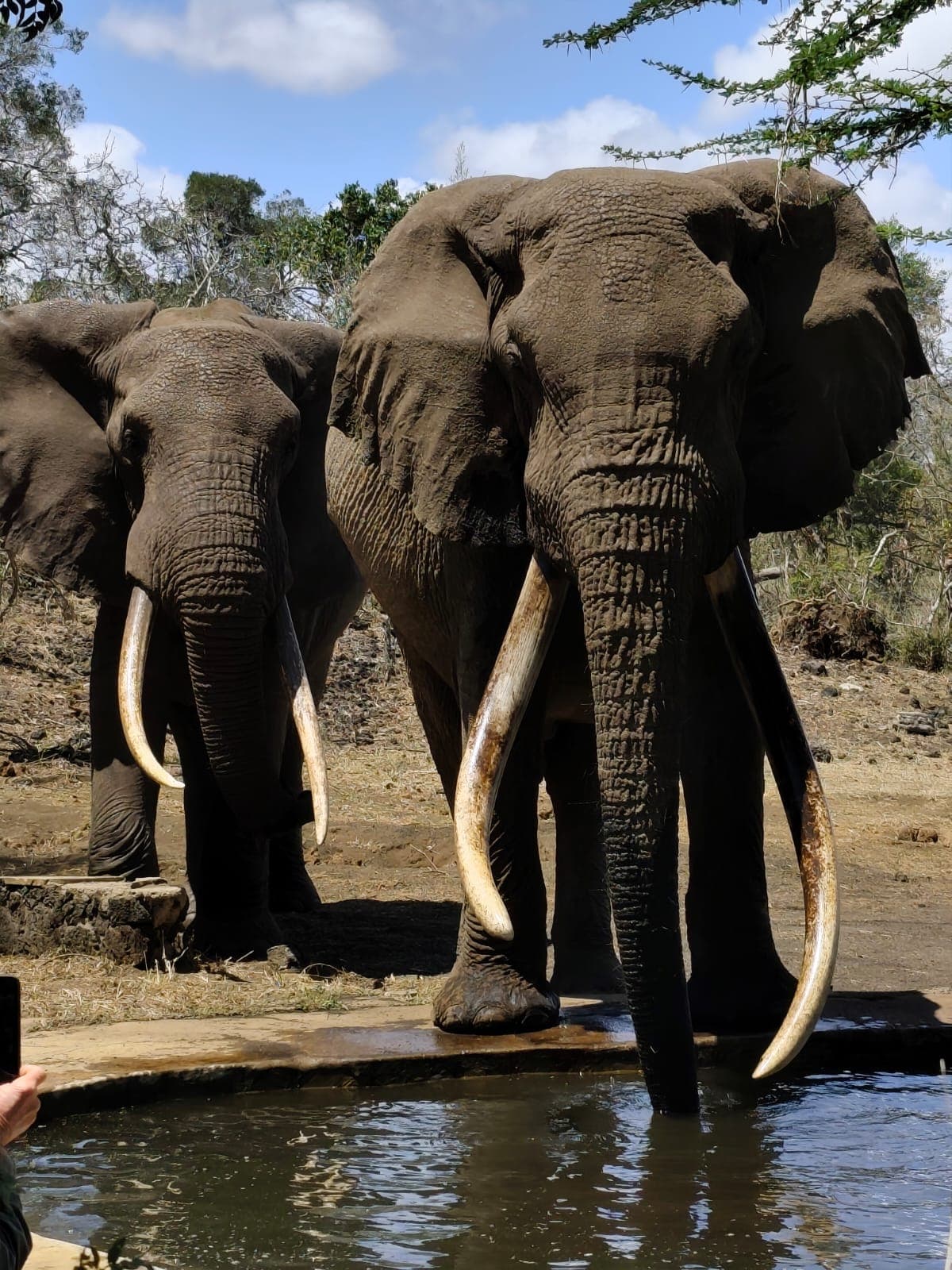
- The gates open and the Land Cruiser rolls into a park that feels entirely different from the one tourists imagine. At this hour, the light is golden and flat, the air cool enough that you can smell the dust and the acacia. The elephants — Amboseli's famous herds — are already moving. Big matriarchs leading their families from the swamps toward the open plains, red dust rising around their feet against the white outline of the mountain. The golden hour is the best for photography and for animal activity. I always prioritise the morning game drive — the park rewards those who are early.
SCANNING THE PLAINS
- This is what people come for, and what never gets old. Tracking a pride of lions that were spotted at last night's waterhole. Watching a family of elephants interact — the babies playing, the aunties protective, the old bull moving alone at the edges. Finding a cheetah on a termite mound surveying its territory. Every hour in the bush is its own story.
A guide's work in these hours is part naturalist, part storyteller, part driver. You explain the ecosystem — why the swamps here exist, what draws the elephants to Amboseli in such numbers, how the Maasai and the wildlife have coexisted for centuries in this landscape. You help people see not just animals, but a living world. Amboseli is one of Africa's best parks for elephant research and observation. I personally know many of the individual elephants by name — a connection that transforms a sighting into a story.
BUSH BREAKFAST
- There is something about eating a proper breakfast in the open bush — a flask of coffee, fresh fruit, perhaps a warm egg sandwich. No table in any restaurant quite matches it. We pause. People exhale. Someone always says they didn't know Africa could feel like this.
THE AFTERNOON DRIVE
- After the midday rest — for guests and animals alike — the bush wakes up again. We head back out for the afternoon game drive, often visiting different parts of the park: the open Enkong'u Narok swamp, the acacia woodlands, the observation hill where the view of the entire ecosystem — elephants, plains, mountain — is something guests quietly photograph and loudly describe to everyone they know when they get home.
If time allows, a visit to a Maasai Boma homesteads gives context that no amount of wildlife watching alone can provide. The community, the culture, the long relationship between the people and this land — it completes the picture.
WHEN THE OPEN OFFICE CLOSES
- The sunset and the sky turns shades of amber and rose that no photograph ever fully captures. The elephants head back toward the swamps. The stars come out over Amboseli — and in a park with almost no light pollution, there are a lot of them.
Back at camp, around the fire, my day as a guide doesn't technically end. People want to talk — about what they saw, what surprised them, what they hope for tomorrow. That conversation, as much as anything, is the job. You help them process a day that doesn't fit neatly into ordinary life. That's the whole point.
This is my favorite quote that i came up with while roaming around the wild savannah; "No two days in Oldonyo wuas are the same. The animals move, the light changes, the mountain appears and disappears. That's not a challenge — that's the gift. You show up, you pay attention, and the bush rewards you." - Daniel Lesinko.
If you want to connect with the wild around the Amboseli region contact us via info@lesinkotours.org to book your adventure safari. There's always something mesmerizing the wild has stored so come experience this with me.